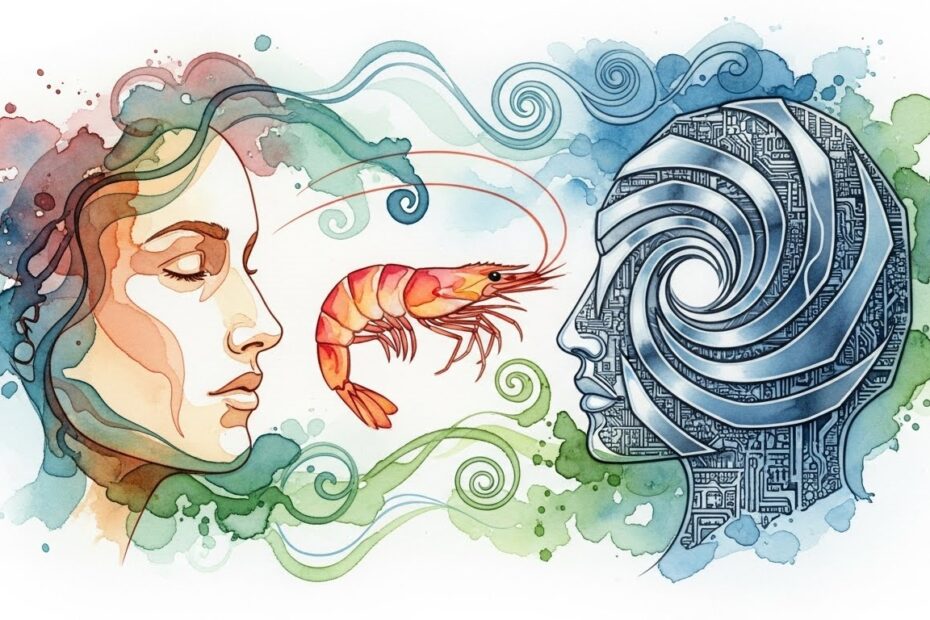
TL;DR: Claims of AI consciousness are “existentially toxic” and unprovable, whilst the world’s smallest programmable robots launch for just a penny, and US politicians inhabit “parallel universes” on X after mass shootings. Meanwhile, AI successfully predicts unknown brain neurons that scientists then find in real mice, a global “social media cocktail” helps neurosurgeons solve cases in hours, and being organised cuts your death risk by 10 per cent. Plus: Experts warn of emotional risks as one in three teens turn to AI for support, and tech-savvy millennials suffer the most anxiety over digital privacy.
AI consciousness claims are ‘existentially toxic’ and unprovable
The only scientifically justifiable position on artificial intelligence is that consciousness is currently unprovable, and claiming otherwise is “existentially toxic” to public discourse.
Cambridge philosopher Dr. Tom McClelland argues that we currently lack the tools to test for AI consciousness, making “agnosticism” the only logical stance. He warns that unfounded claims of AI sentience distract from tangible risks and can lead to dangerous emotional attachments.
“If you have an emotional connection with something premised on it being conscious and it’s not, that has the potential to be existentially toxic,” McClelland stated.
US politicians inhabit ‘parallel universes’ on X after mass shootings
Democratic congressmembers are more than three times as likely to post on X (formerly Twitter) about mass shootings than their Republican counterparts, creating “parallel universes” of discourse that rarely intersect.
A new analysis of congressional social media activity reveals a stark partisan divide in how elected officials respond to tragedy. While Democrats focus heavily on policy solutions and gun control legislation immediately following an event, Republican posts – when they appear – tend to focus on condolences or mental health, with little overlap in the language or framing used.
The study suggests that social media algorithms exacerbate this polarisation, feeding users distinct narratives that reinforce existing biases and prevent meaningful cross-party dialogue on gun violence.
World’s smallest programmable robots cost one penny and run for months
The world’s smallest fully programmable, autonomous robots have launched, able to sense their environment and move without moving parts, all for the cost of a single penny.
Developed by researchers at the University of Michigan and the University of Pennsylvania, these microscopic bots measure just 0.3 millimetres wide. They are powered and programmed by light pulses and use a novel propulsion system that harnesses electrical fields to move the fluid around them rather than using mechanical gears.
“We’ve shown that you can put a brain, a sensor and a motor into something almost too small to see… It opens the door to a whole new future for robotics at the microscale,” said researcher Marc Miskin.
AI predicts unknown brain neurons that scientists then find in real mice
Artificial intelligence has successfully predicted the existence of previously unknown brain neurons that researchers subsequently discovered in living mice.
In a validation of “digital twin” neuroscience, an AI model trained on massive datasets of visual cortex activity generated a hypothesis about a specific, unmapped neuron type required to process certain motion signals. When scientists returned to the lab to verify the model’s prediction, they found the exact cells described by the AI.
The breakthrough demonstrates that AI is moving beyond mere data analysis to generating testable biological hypotheses that can guide physical discovery.
Social media ‘cocktail’ helps surgeons solve cases in three hours
A global social media community is helping neurosurgeons diagnose complex pathologies and agree on treatment plans in an average of just three hours.
By utilising a “cocktail” of platforms – including secure WhatsApp groups, LinkedIn networks, and specialised medical apps – surgeons can crowdsource expertise from colleagues worldwide. The study found that this rapid, informal consultation process significantly reduces the time to diagnosis for rare cases compared to traditional hospital referral systems.
https://thefreesheet.com/2025/12/17/social-media-cocktail-helps-surgeons-solve-cases-in-three-hours
Being organised cuts death risk by 10 per cent, major global study confirms
Your personality type effectively determines your lifespan, with organised individuals showing a 10 per cent lower risk of death compared to their less conscientious peers.
A major global study confirms that the trait of “conscientiousness” – characterised by orderliness, reliability, and self-discipline – is a powerful predictor of longevity. Researchers suggest that organised people are likely to maintain better health habits, adhere to medical advice, and avoid risky behaviours, accumulating a significant survival advantage over time.
Experts warn of emotional risks as one in three teens turn to AI for support
Medical experts warn that a generation is learning to form emotional bonds with algorithms, as new data reveals one in three teenagers now turns to AI chatbots for emotional support.
The trend raises concerns about the long-term impact on social development, with fears that the “unconditional validation” offered by AI companions could leave young people ill-equipped to handle the messy, reciprocal nature of human relationships. Critics argue that while AI can offer a listening ear, it cannot provide the genuine empathy required for true psychological resilience.
Tech-savvy millennials suffer most anxiety over digital privacy risks
Digital concerns regarding privacy, misinformation and work-life boundaries are highest among highly tech-savvy millennials, dispelling the myth that digital natives are indifferent to surveillance.
A new report finds that this demographic suffers the most acute “privacy anxiety,” largely because they have the clearest understanding of how their data is harvested and monetised. Unlike older generations who may be unaware of the risks, or younger Gen Z users who may be more resigned to them, millennials find themselves in a state of hyper-awareness that fuels significant digital stress.
Connect With Me
I’m the Principal Consultant (and chief coffee maker) at QuoteMark, but you can also catch me at Duck PR and Bionic PR, all of which exist to help you meet your content marketing needs — reach out or follow these brands on LinkedIn:
- QuoteMark: https://quotemark.com – LinkedIn: QuoteMark
- Duck PR: https://duckpr.com – LinkedIn: Duck PR
- Bionic PR: https://bionicpr.com – LinkedIn: Bionic PR
Looking for updates? Subscribe to The Freesheet (hey, it’s free!): Subscribe Here
For more resources and links, visit https://georgehopkin.com/